
Was it worth it? Why did we do it?
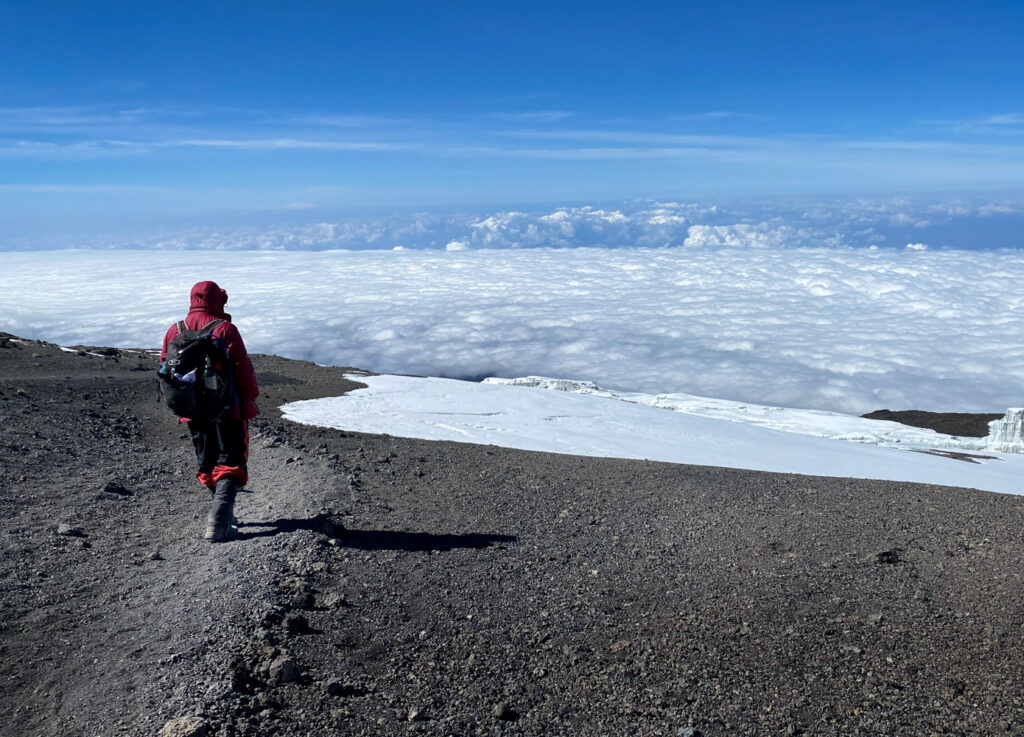
I found myself thinking about all these things during our final descent from Kilimanjaro.
1. The Challenge
Some people run marathons. People who like to travel enjoy epic hikes.
Summiting the highest mountain in Africa certainly has a nice ring to it.
2. The People and Their Culture
When we first started preparing for the trip, we wondered: “Why do we need a crew with porters? We always carry our own gear.”
Believe me… you need a crew.
We quickly learned that climbing Kilimanjaro is very different from going on a regular hike.
Independent climbing is not permitted. You climb with a licensed guide and tour operator, and on most routes, you sleep in tents at designated campsites. There is no electricity, no shower, and no running water waiting for you at camp. Everything needed for several days on the mountain — tents, food, cooking equipment, tables, chairs and other supplies — has to be carried from camp to camp.
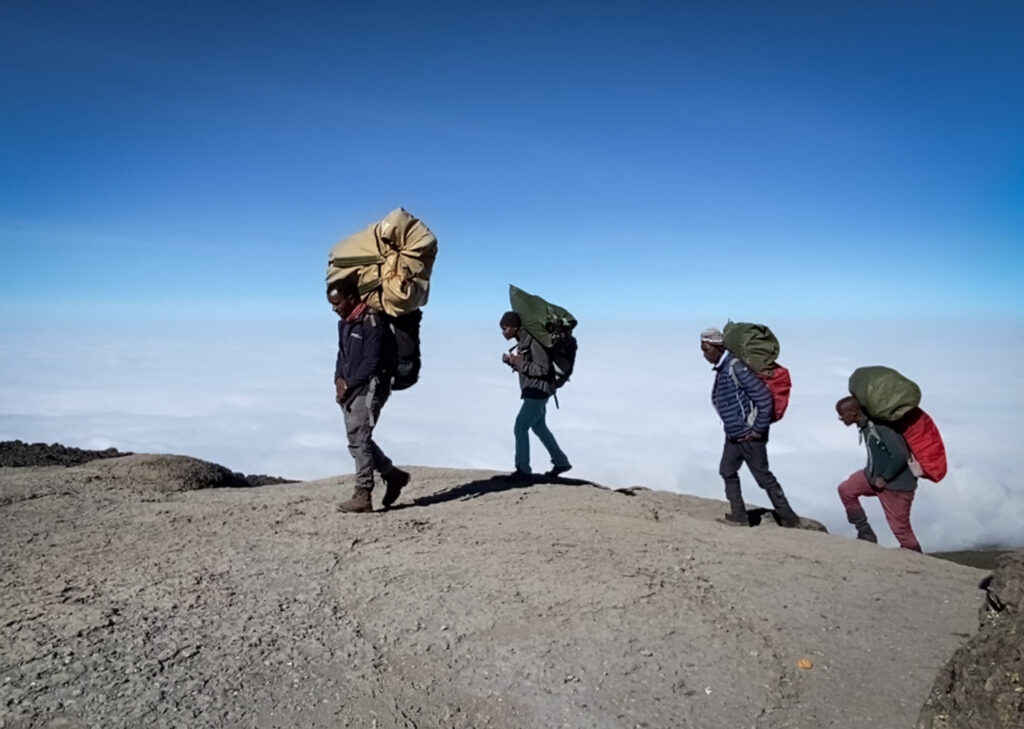
Kilimanjaro supports an entire industry of thousands of people.
Their mission: helping climbers reach the highest freestanding mountain in the world.
Their focus: the client — always.
A typical day begins with waking up in our tent as a porter brings us warm water to wash up, followed by a three-course breakfast. After we pack our day packs, the porters carry everything else to the next camp.
Porters carry up to 20 kg, including their own belongings and equipment for the clients and crew.
They transport tents, dining equipment, tables, chairs, crew shelters, food and cooking gear. They also collect water from available sources along the route, which is then treated for drinking.
As we hike slowly upward, the porters break down camp, pass us with a smile and a warm “jambo,” and hurry ahead to set everything up again before we arrive.
By noon, lunch is served. Camp is rebuilt again in the evening. Our belongings are already inside our tent, warm water is prepared for washing, and we end the day with a medical check and briefing from the head guide.
This is not like making casual friends on beach chairs in Tulum.
You spend your days with a group of incredible people with extraordinary strength, always greeting you with a genuine smile. Their motto: hakuna matata — no worries.
We traveled as a couple supported by a crew of 11: two guides, one cook and eight porters. We learned every name.
We booked our expedition with Exuberant Kilimanjaro, a small locally owned company — and they were outstanding.
3. The Scenery
During our six-day journey, we passed through five climate zones and ecosystems:
- Cultivation zone
- Tropical forest with blue monkeys and black-and-white colobus monkeys
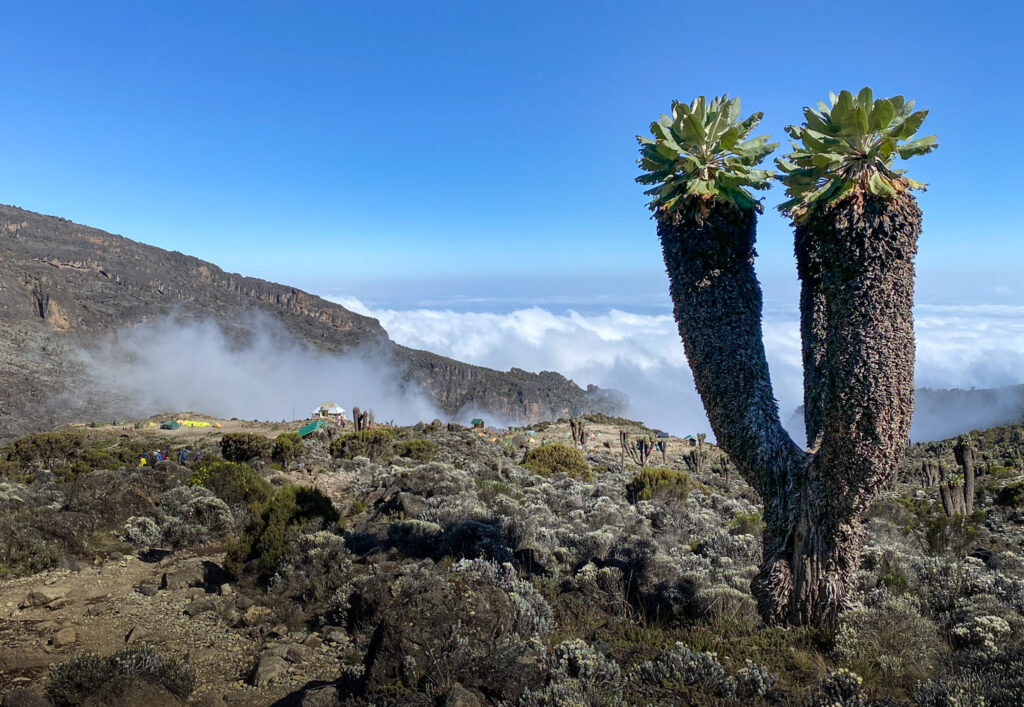
- Semi-alpine heath moorland filled with giant lobelia and other surreal plants
- Alpine desert, all volcanic rock
- Summit zone, where glaciers appear
My only regret is still struggling with astrophotography — I couldn’t capture the unbelievable view of the stars and the Milky Way. It was brutally cold, and leaving my -40°C sleeping bag for even a minute felt impossible.
From the second day on, we were hiking above the clouds, witnessing spectacular sunrises and sunsets.
So, in conclusion, yes. We still look back to our Kilimanjaro trip as one of our most challenging, but memorable experiences.
View the photo gallery
See the complete Kilimanjaro photo collection.
Watch the personal video
A more personal look at our Kilimanjaro climb, including moments that didn’t make it into the article.